

Summary
Central Queensland Health now employs more First Nations staff than ever before as it works to build a strong Aboriginal and Torres Strait Islander health workforce.
Executive Director of Aboriginal and Torres Strait Islander Health Donna K. Cruickshank is proud of the work that has been done in that space.
There are 220 Aboriginal and Torres Strait Islander employees across Central Queensland Hospital and Health Service, which is 4.5% of the total workforce.
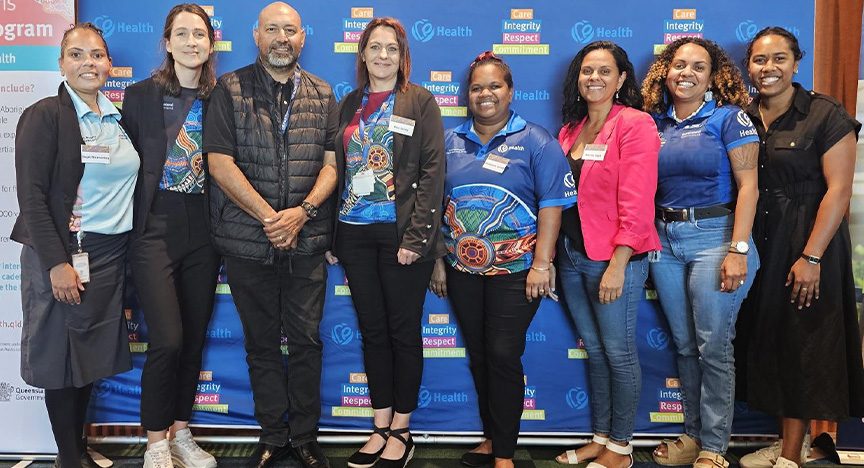
This was celebrated at a First Nations Workforce Forum at the Keppel Bay Sailing Club in Yeppoon.
“We have a strong focus on closing the health equity gaps of First Nations peoples within Central Queensland, and a large part of that is employing more Aboriginal and Torres Strait Islander staff to support a culturally safe space for our patients and the people for which we care,” she said.
The health service employs Indigenous Hospital Liaison Officers, mental health workers, and Aboriginal and Torres Strait Islander health workers.
Initiatives that have built the workforce include the Deadly Start Program that has provided about 30 school-based traineeships in nursing and allied health. Students do placements and gain a Certificate III qualification, and a pathway to a career in health.
“We have a team working in our Aboriginal and Torres Strait Islander Directorate to help support our staff to provide the best possible service to all of our community,” Ms Cruickshank said.
A new Clinical Nurse Consultant Cultural Health, and a Senior Allied Health Clinician, have been appointed in the Aboriginal and Torres Strait Islander Directorate team to address priority community health needs.
A Transport Officer is employed in Rockhampton to improve access to Aboriginal and Torres Strait Islander patients, and work continues to enhance transport services across Central Queensland.
The Indigenous Hospital Liaison service in Rockhampton added a role to support patients with chronic illness.
Ms Cruickshank said a strong First Nations workforce was essential in Central Queensland, where according to the 2020 census, 7.2% of people identified as being Aboriginal and/or Torres Strait Islander, compared with 4% of the Queensland population.
“It is therefore essential we create a health service that is culturally appropriate and safe to ensure we get the best possible outcomes for our people.”