

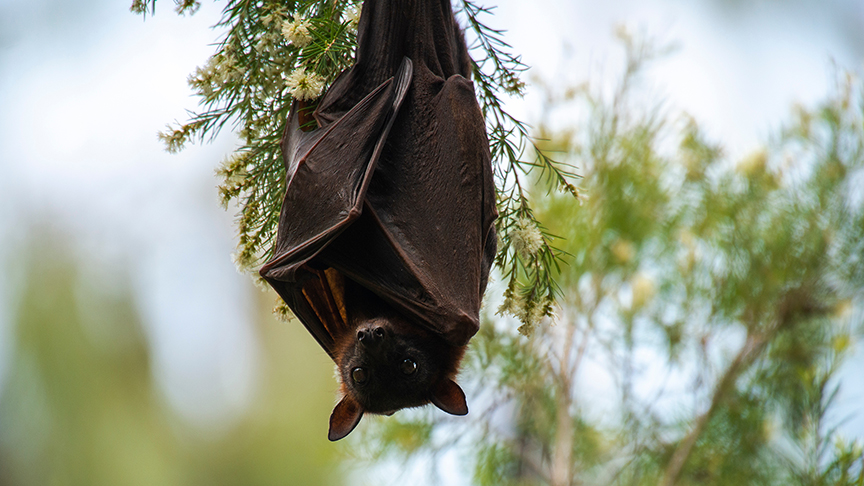
Central Queensland Health’s Public Health Unit is reminding residents not to touch or pick up bats and flying foxes, even if they appear sick or injured.
As summer approaches, hot temperatures can cause bats to become heat-stressed and fall to the ground.
So far this year, the CQ Public Health Unit has managed 35 cases of people who have been bitten or scratched – an increase on last year.
Bats can carry Australian bat lyssavirus (ABLV) – a virus closely related to rabies.
Dr James Harris said while human infection was rare, it is almost always fatal once symptoms develop.
“The safest thing for people to do is assume any bat could be carrying ABLV, and avoid any contact,” he said.
“A bite or scratch from a bat that’s carrying ABLV can be deadly.
“Even using gloves or a towel could lead to a bite or scratch, so only trained and vaccinated wildlife rescuers should handle bats.”
Storms can also cause bats to fall from trees or seek shelter closer to the ground, increasing the chance of being found by people.
“There is often increased bat activity during the summer months, and the heat may make it more likely they are on the ground, injured or trapped,” Dr Harris said.
“If you find a bat injured or trapped, report it to the RSPCA or a wildlife organisation, and remove children and pets from the area.
“Anyone who is bitten or scratched by a bat should wash the wound with soap and water for 5 minutes and seek medical attention urgently.
"Fortunately, ABLV infection can be completely prevented by receiving a course of rabies vaccines if people have been scratched – but it is best not to be scratched at all!"
Report injured or distressed bats to:
- RSPCA: 1300 ANIMAL (1300 264 625)
- Department of Environment and Science: 1300 130 372
- Local wildlife care groups and trained bat rescuers
For medical advice on bites and exposure:
- Call 13 HEALTH (13 43 25 84)